A Free Interpersonal Check-In Questionnaire, Feedback Tool, Guide and Boundary Setting Assessment
Making the Unspoken- Out in the Open.

A one on one relationship dynamics check-in questionnaire and guide created using interpersonal therapy skills, relationship/couples therapy skills and communication techniques, and Neurodivergent-affirming frameworks for anyone in almost any one on one relationship to talk about the important things between them. For couples, family members, mentors, new and old friends, spouses, lovers, situationships, friends with benefits, you and your support aide, supervisor and employee, someone you are in conflict with, etc.
And an accessibility tool for bridging Neurotypical to Neurodivergent communication differences.
Designed by a Neurodivergent therapist and life coach who has spent years supporting Neurotypical and Neurodivergent individuals/couples with interpersonal communication and bridging communication gaps.
The guide is intended to help bridge differences in communication that often can disrupt interpersonal relationships and communication efficacy, especially between individuals with different sociocultural communication styles or abilities. Regardless of Neurotype or pre-existing communication norms, this tool can support individuals in relationships with meeting in the middle to have direct and effective communication about their connection.
The Need
Designed to compensate for the mainstream, predominant cultural norm of indirect communication or not communicating directly enough about our relationships and what's going between us. The tendency of focusing on doing relationships rather than communicating about them as they are happening. Something I've experienced in my own life frequently and witnessed in countless couples and clients I've worked with that often results in us avoiding or pushing off talking about anything that could be uncomfortable. Avoidance of confrontation on all fronts. Conflict avoidance is embedded in our cultural social norms.
It makes sense why we avoid and ignore it, and a lot of us never were taught how to have healthy communication around uncomfortable feelings or issues with each other. But when we ignore and push down our problems or fail to communicate expectations or boundaries until they blow up, that often ends in collision from bottled up conflicts, misunderstandings, and ruptures or ghostings. These indirect and avoidant communication tendencies come from sociocultural norms and unspoken predominant Neurotypical social rules.
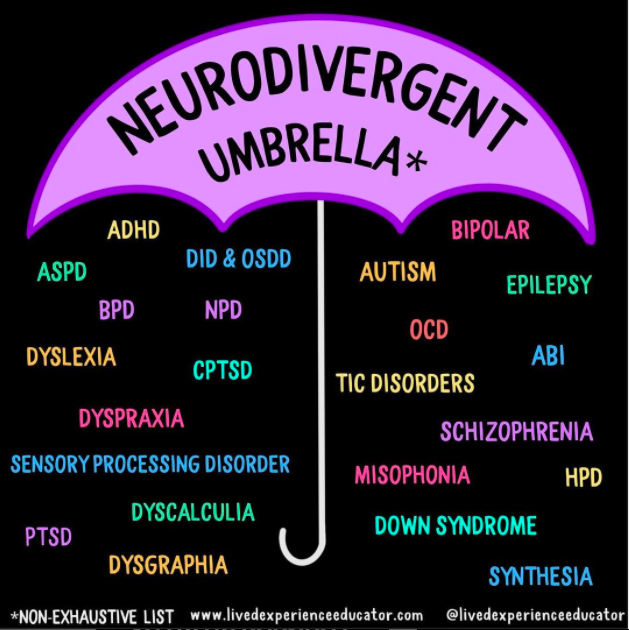
Neurotypicals tend to communicate with each other through indirect social cues and communication, nonverbal expressions, and subscribe to interpersonal expectations in relationships that are not expressed directly (more info on neurotypical communication/traits). Since most people tend to conform to these ways of communication, Neurodivergent folks who display divergence in communication are often stigmatized, misunderstood, and ostracized for these differences (especially Autistics). Neurodivergent individuals have brain types or Neurotypes that operate in ways that are significantly different from dominant social standards of Neurotypical ways of operating or communicating.
You don't need to be Neurodivergent to benefit from this tool. It can be useful for anyone and any relationship that's between two people- whether the relationship is new and still developing, lifelong, or those dealing with conflict, or folks wanting to avoid potential conflict down the road.
More on the need for the guide on Instagram Reels Part 1 and 2.
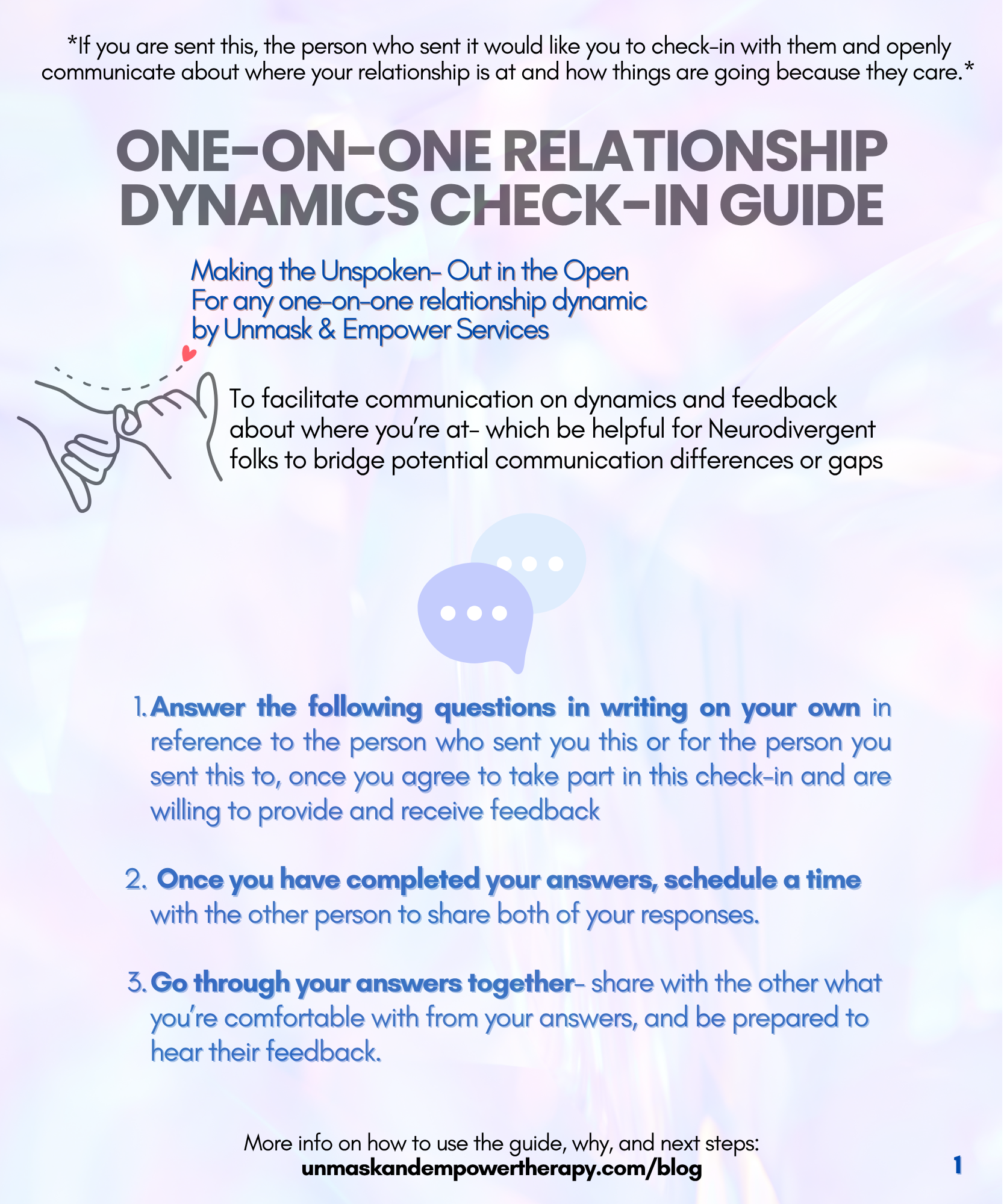
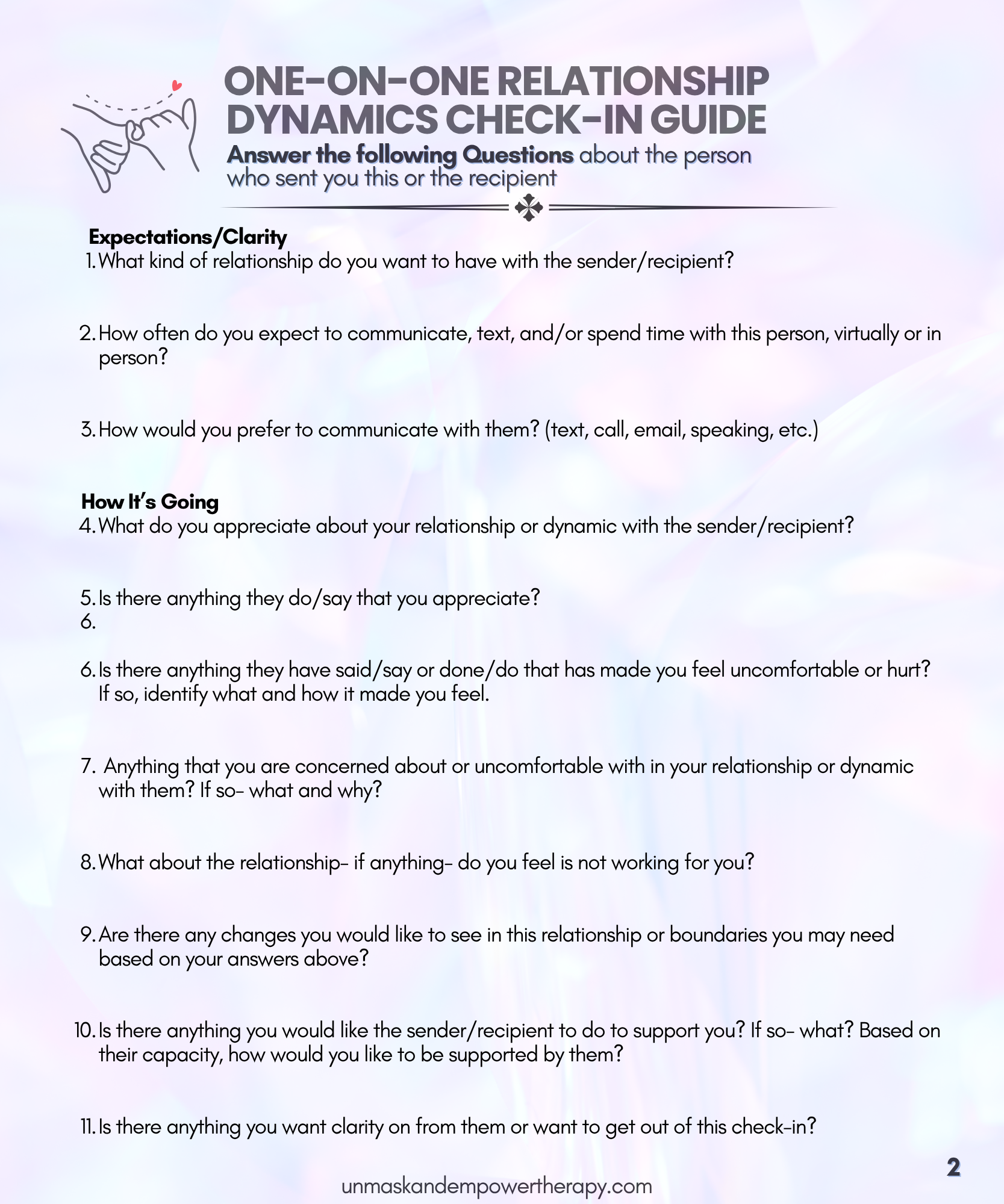
Abridged Guide and One Page Version
Download the One Page/Short Version Here

The Abridged Version is shorter and easier to share.
How to Use the Guide: the Walkthrough
Mutual Agreement
Before starting the guide, both individuals within the relationship have to agree to engage in the check-in, to answer the questions, and discuss relational dynamics while receiving feedback from the other person. This can be an important consideration depending on the relationship and the capacity of both individuals. It’s important to check in with yourself to identify if you have the capacity and ability to potentially confront uncomfortable or painful patterns or impacts that are happening in the relationship. If the relationship involves any elements of abuse/neglect or the potential for one person to retaliate in response to the other suggesting the check-in, this tool may not be safe or effective to use within those dynamics. If one person is not able to hold space or listen to the other’s feelings or uncomfortable experiences of the relationship without becoming volatile or aggressive in response, that is not a safe relationship for this tool to be utilized in. The recipient of the check-in suggestion may not be able to hold space for these conversations or emotionally mature enough to engage with the feedback in an effective way.
How the answers are shared matters. How the answers are responded to by the other individual matters. To engage with this tool, some emotional courage is needed by both parties. We can learn a lot about ourselves in how we react to this feedback.
If both individuals in the relationship agree to engage in the check-in and receive feedback, they begin with:
Step 1:
Set aside time to intentionally fill out the questionnaire on your own.

Consider the questions about the other person in the relationship. Write or type your answers honestly (questions also listed below) and make sure to save your responses. Your initial answers are for you to journal and explore your feelings. You decide how much you feel comfortable sharing from your answers with the other person.
The Questionnaire
Expectations/Clarity Section
What kind of relationship do you want to have with the sender/recipient?
How often do you expect to communicate, text, and/or spend time with this person, virtually or in person?
How would you prefer to communicate with them? (text, call, email, speaking, etc.)
How It’s Going Section
4. What do you appreciate about your relationship or dynamic with the sender/recipient?
5. Is there anything they do/say that you appreciate?
6. Is there anything they have said/say or done/do that has made you feel uncomfortable or hurt? If so, identify what and how it made you feel.
7. Anything that you are concerned about or uncomfortable with in your relationship or dynamic with them? If so- what and why?
8. What about the relationship- if anything- do you feel is not working for you?
9. Are there any changes you would like to see in this relationship or boundaries you may need based on your answers above?
10. Is there anything you would like the sender/recipient to do to support you? If so- what? Based on their capacity, how would you like to be supported by them?
11. Is there anything you want clarity on from them or want to get out of this check-in?
Question 9- Considering and Identifying Boundaries
Brene Brown describes boundaries as a gift of compassion and clear expectations to give someone- telling them what they can do and not do with you.
If feelings of frustration or resentment come up in response to some of the questions- especially number 6, 7, and 8- those may be important signals. Those feelings may mean you are or have been feeling anger towards the other person in the relationship. Experiencing some anger or resentment can be a good indicator that there’s a boundary you are experiencing a need to set or enforce with someone. Communicating a boundary can be a way to improve the relationship or clarify things for the other person about what to expect. There are many kinds of boundaries, both communicated and un-communicated. For the sake of the check-in, if it feels safe to voice, it may be important to lean into expressing the boundary you are needing explicitly/directly as a part of your conversation in the next step.
Question 11- Conversation Intention Directions
Come up with intention(s) for the conversation beforehand. Some directions to answer this question could be- based on your answers, what do you want to get out of this convo?
What clarity from the other person may be helpful to have? Any questions you have for the other person? Try to avoid making assumptions about the other person and what’s happening between you before you discuss it. More on how to implement this here.
If you want to maintain and continue growing within this relationship, try to lean into curiosity instead and to give the other individual the benefit of the doubt (depending on the relationship and the history).

Is there any change or additional elements you would like the relationship to adopt or grow into? Is there any boundary or need that your feelings are signaling you to express? If so, how would you be comfortable voicing those and how much are you comfortable sharing?
Step 2:
Schedule a time to check-in with each other, ideally not too long after you answer the questions. You can make it as informal or formal as you like.
This conversation can happen either speaking or typed, over messages, voice notes, or in a spoken conversation in person or a video call, etc. Plan to communicate what you’re comfortable sharing with the other depending on your relationship.

Step 3: Talk/Message about it!
You can begin by going over what you each wrote for the answers. You can choose if you would prefer to each share all your answers at one time, taking turns or for each question as you go, with both sharing responses. Avoid interrupting or responses during this step. Focus on sharing and sticking to your individual answers.
Try to express your thoughts and feelings with “I” statements, ideally sharing your feelings/thoughts and avoiding assumptions.
Step 4: Pause and Regulate
After you have both shared your answers, slow down and take time to digest the feedback. Focus on taking some slow deep breaths or box-breathing techniques to remind your nervous system that you are okay if the feedback wasn’t easy to hear or brought up feelings for you.
Step 5: Respond

In your initial response if you want to maintain and grow in this relationship, try to lean into active listening and validating the things you’re hearing/reading from the other person that make sense to you or are understandable. You don’t need to lie or pretend if you don’t understand, instead lean into curiosity and respectful questions.
Avoid becoming defensive if there is feedback that brings up the impulse to justify or explain yourself. Instead, slow down and focus on regulating yourself and take some space if it’s feeling activating. If you want to continue or maintain this relationship schedule another time to continue the conversation with the other person. Try to discuss and schedule for next time before you step away from the conversation.
Instead of rushing to defend yourself and explain your actions, listen to the other person’s feelings about it. Implement some active listening skills. Give the other person space to share their feelings and the impact that your actions or words had on them.
If you are able and willing, take responsibility if any of your actions have caused harm or hurt to the other person. Consider if an apology and accountability is needed. Continue to reflect and consider this after the conversation.
Once they are finished sharing, you can ask if the other person would be willing to hear more context or explanation about what happened and share that if they are willing to hear more.
Step 6: Reflect
Either together or separetely, process and reflect on what you’ve learned and received. Compare your answers with each other’s and identify if there’s disagreements or conflicts coming up. Note any patterns of conflict and try to identify the cause(s) or cycles at play.
Reflection Directions:
Identify ways to apply this feedback to improve your relationship or make needed changes to it. If you want to maintain and grow in the relationship, identify any potential ways to compromise more or meet in the middle where it seems possible.
Decide if you need to re-evaluate or change your relationship on your own. Then discuss what needs you may have for change or boundaries or an end to the relationship, etc. You may disagree on this point and it may not be possible to find agreement. Identify if some things aren’t working.
If you are experiencing cycles of conflict that continue after this process and you want to continue this relationship, it may be useful to look into getting support through mediation, couples or family therapy, or related resources.

Why Use the Guide?
Bridging Communication Gaps
People in relationships often seem to follow Neurotypical social norms as the unspoken expectation or default way of communicating, which lends itself to the avoidance of clear, explicit, direct meta-communication about interpersonal dynamics (conversations about dynamics between individuals and how they perceive and receive each other and the things done and said between them).
As a therapist, I often witness the fallout of communication that relies on implicit, indirect cues and unspoken assumptions. I’ve seen it cause a lot of upheaval and conflict in many relationships. A large part of effective couples’ therapy work involves teaching individuals to embrace the opposite and lean into clear, direct, and open communication. To work on making less assumptions and expressing more curiosity, empathy, and active listening for the other person in the relationship to maintain it.
To bridge the gap from Neurotypical communication norms and also address potential communication avoidance that it entails, we need more explicit and clear communication to happen in relationships proactively. Neuronormativity, the tendency to conform to Neurotypical norms or indirect social communication devices, is common for Neurodivergent adults to engage in as a survival strategy. It’s not just Neurotypicals engaging in indirect, unspoken communication, many Neurodivergent folks are masking and trying to copy these norms consciously and unconsciously. Naturally, misunderstandings are common and Neurotypical social norms encourage avoidance of discussing or acknowledging the issues. Neurodivergent folks are struggling with isolation, being misunderstood, and socially ostracized for expressing their divergence from social norms.

The guide is an attempt to bridge these gaps and support folks meeting in the middle with open and direct effective communication. It’s a structure for individuals to give and receive interpersonal feedback. It’s a form of resistance to Neurotypical social communication norms and the tendency for avoidance.
The check-in tool can facilitate more relationship check-ins and foster effective and healthy direct communication, which is needed now more than ever with so many of us struggling with the state of the world, financial pressures, our own health/Disability/Chronic Illness, etc. The check-in guide is intended to make interpersonal communication more accessible for Neurodivergent folks to find a middle ground to communicate on.
The tool was made by me, Anna. A Neurodivergent person who’s been a therapist and couples’ therapist for over dozens of folks over the past few years, while navigating communication gaps in my personal relationships for decades. I’ve worked with neurotypical and Neurodivergent clients and couples in various relationships. I have been researching and writing about Neurodivergence, Neurotypical social norms, effective interpersonal communication, and the ways that Neurodivergent folks communicate for years.
I proudly specialize in working with Neurodivergent and Disabled/chronically ill adults from Neurodivergent-Affirming frameworks. I have studied and utilized various couples’ and relationship therapy tools and techniques based on an ecclectic range of therapeutic approaches, especially AEDP and relational modalities, which emphasize the importance of making the implicit explicit.
I’ve applied these approaches with my own clients and witnessed the numerous benefits of encouraging individuals to confront our emotions and interpersonal experiences. I’ve guided clients on the many ways we can honor and empower ourselves through feeling our feelings and expressing ourselves authentically and Unmasked.
Accessibility
Not only is it better for all of us to have more open conversations about our relationship dynamics, but it’s also more accessible to have a structure to translate different communication styles onto the same playing field.
The check-in guide is also intended to be a bridge for communication gaps that can support Autistic and other Neurodivergent folks with communicating effectively with Neurotypicals, those conforming to Neuronormativity or Neurotypical social communication norms, etc.
The guide facilitates both individuals in a relationship to give and receive interpersonal feedback that they can potentially use to grow after having dialogue about it. Non-speaking, verbal Autistic folks can also use this questionnaire to communicate about their relationships via non-speaking alternative communication, typed or written, etc.
Many Autistics are non-speaking and verbally communicate in alternative ways. The guide’s structure is inclusive for verbal, non-speaking individuals without speaking required for the dialogue steps.
This guide and questionnaire also provides a direct structure to follow with clear instructions on how to navigate giving and receiving interpersonal feedback. Having structured guidance and tools can benefit Autistic people and other Neurodivergent folks that struggle with navigating social initiation, unspoken cues within conversations, especially with Neurotypical individuals.
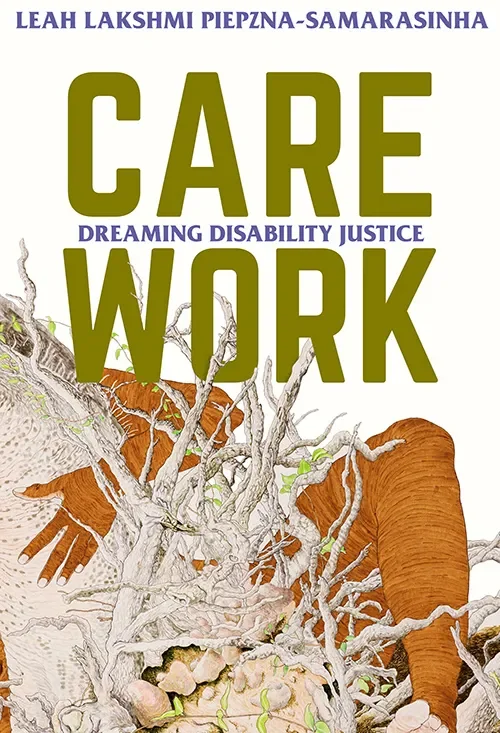
Communication around boundaries and support needs is often an important interpersonal conversation for many Disabled and chronically ill folks in relationships. In the questionnaire, there are questions designed to open discussion around these dynamics. The language in the questionnaire is informed by Disability Justice and Disabled care work practices described in Leah Lakshmi Piepzna-Samarasinha’s Care Work.
The question “Is there anything you would like the other person to do to support you?” is intended to invite open conversation on support needs and care requests/preferences according to the individual.
You can learn more about other tangible support practices, forms of verbal and actionable support, that you can use to to navigate similar dynamics with a loved one here.
Questions/Comments or Resource Needs? Feedback on ways to make the guide better or more accessible?
I want to hear from you! Let me know by filling out the form below.
Go Deeper:
Want to get more feedback and finetune your communication skills?
Or learn how to advocate for yourself and play into your strengths?
Communication Coaching might change everything.
Learn about communication coaching with Anna and their therapy services.
