Oct 14, 2024
Have you ever struggled with how to give real support to a person you love? How do you give support to someone you care about when they are struggling? We aren't mind-readers despite how hard we might try. A prominent voice for the Disabled and chronically ill community offers some guidance on tangible, real ways to show up for a person you love who is going through it- whether it's illness, disability, mental health, grief, or dealing with the Horrors.
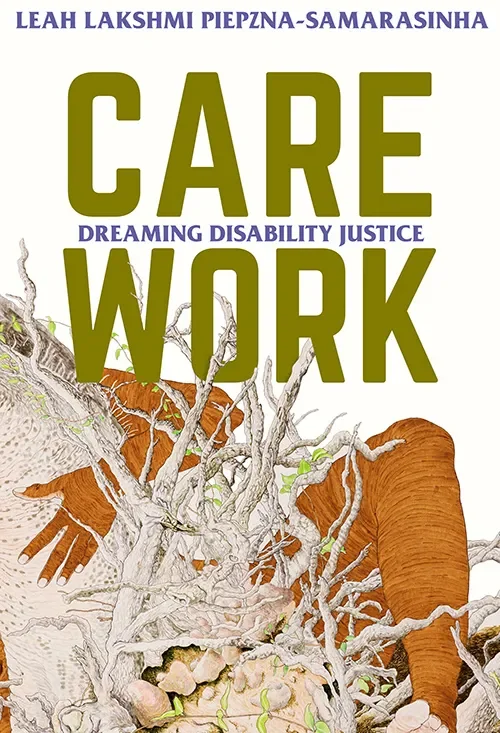
This guidance comes from an incredible book- Care Work: Dreaming Disability Justice by Leah Lakshmi Piepzna-Samarasinha (here’s more information). Their advice, in the chapter “Crip Emotional Intelligence,” highlights how the Disabled community is skilled at showing up for each other in resilient, unassuming ways. This chapter and the book contain necessary lessons on how to truly support someone you love. While not everyone has experiences with Disability or Disability culture, we all can learn from it. Disabled communities often care for and show up for each other in revolutionary ways because our circumstances have shown us that the systems and institutions in place often fail us. We have had to learn that we take care of us because as a whole, able-bodied people and systems designed by them don't take care of us. Much of this blog will draw from this chapter of this book and from my own experiences as a therapist and an emotional care worker.
Why saying ‘just call me’ isn’t always enough
Sometimes when we know our loved ones are struggling, we do not know what to do or how we can help them. We are often hesitant to take the initiative with how to support them because of this uncertainty. So, many of us tell our loved ones that we are there for them when they need us. We say “let me know if there’s anything I can do,” “just call me if you need anything," etc. We do this, because a lot of us do not know what else to do or how else to help. It may feel like a safe way to cover ourselves when we are frozen by that uncertainty.
But, unfortunately, as Piepzna-Samarasinha describes in Care Work, there is a huge stigma against asking for help when you're someone who has been Going Through It for a While- someone Neurodivergent, or dealing with trauma or mental health issues, or Disabled or chronically ill, etc.. And this stigma often extends beyond the Disabled community.
Stigma and fear
Piepzna-Samarasinha describes the experience that many individuals in the Disabled community have had with asking for help:
“many people I know and love have a really hard time receiving care because ‘care’ has always been conditional or violent” (p. 132).
For many individuals who have struggled with receiving real and safe care in the past, asking for help again can be triggering and terrifying. Asking for help opens you up to vulnerability in awaiting someone's answer.
This fear and stigma around asking for support can make it hard for the person you love who is struggling to reach out when they need you. For example, they may hesitate to call you when they need to talk to someone because their anxiety and past experiences are telling them, "maybe they are busy and won't even pick up and I'll have to leave a voicemail and pretend to be fine" or "You're such a burden, just like last time when Melissa said you were being manipulative after you tried to vent with her."
It’s hard to know if they will take the risk and ask you for help that they might need. We need to recognize that saying “just call me” isn’t always enough. We have to understand the stigma around asking for help can be a barrier for our loved ones to initiate asking. This barrier can keep us from being able to show up for and support the people we care about. Because of this, we have to be ready to do more and be willing to bridge the gap when we are able.
Offering acts of service

Because of the stigma around asking for help, sometimes to really support someone, we need to step in and offer what we can do. We can show up in real ways by recognizing the realistic things we could do to show support or provide help to someone we love. This takes off the burden of the other person having to ask when asking can be so difficult.
Offering support is what Piepzna-Samarasinha highlights as a kind of “Crip Emotional Intelligence” in Disabled culture. They describe it as
“offering to do laundry. Is offering to do it again. Is knowing you will probably have to offer help a million times before another disabled person takes you up on it” (p. 72).
They describe how offering acts of service is a kind of Disabled love language that can be stubborn, persistent, while understanding. There is a shared Knowing of how hard it can be for a fellow Disabled person to ask for help. This is a lesson we can all learn when it comes to offering support. Acts of service can look like checking in on what our bodies and minds are capable of then identifying options based off of our capacity that could be helpful or supportive to the person who we want to support.
It can look like providing multiple choice options to them, or offering to do laundry, offering to do dishes, or saying you will make them a meal. It can also include asking if your friend needs you to come over and sit with them and talk or not talk or hug. Offering specific acts of service to those we love can prevent them from having to ask for help in the first place.
How to honor your capacity
There is only so much support we can offer the people we love before we run out of energy. Piepzna-Samarasinha describes how important it is to communicate what you can do to support a loved one. This communication is especially important when you are reaching your threshold of ability or energy.

As many of us in the Disabled community know, we all have limited levels of energy and abilities that eventually run out. In Disabled culture, we communicate to our loved ones when our Spoons of energy run out. We know Spoon Theory and use it to have empathy with each other. This understanding helps us and the ones we care for to understand without judgment what we can or cannot do and to honor that reality. Giving real support to our loved ones involves understanding our limits and prioritizing ourselves when we need to or else it will be insincere and sacrificial.
It’s important to remember that supporting someone does not mean becoming their therapist. We can only do so much to support someone, and it is not our responsibility to become their savior or to heal them. When offering support to our loved ones who are struggling, we also need to take care of ourselves. We need to know when we can offer support and when we can’t to avoid overextending ourselves which can complicate the dynamics between you and the person you are supporting.
Ask before offering advice
You can also provide support by talking or messaging your loved one. Supporting a loved one verbally when you are able to can look like putting their communication needs first. This means honoring what they would like from you in the moment. This means leaning into active listening by default, and when unsure asking, “Do you want me to listen or give you space or distract you or give advice?”
A lot of individuals tend to give advice when our loved ones are struggling with something. They feel the urge to fix it. We do this because we think solving the problem will make things okay. But often, giving advice or trying to fix the problem isn’t what others want when they come to us with their struggles. A lot of people actually find receiving unsolicited advice unpleasant. Often, supporting a struggling loved one means prioritizing what they need and what they want support with. It’s helpful to try not to take the responsibility to fix what they are going through without knowing their preferences or what they have already tried. It’s also helpful to avoid comparing their problems to your own by making diminishing or invalidating comments about how "it could be worse" or "they have it worse."
Avoid assumptions
Furthermore, avoid making assumptions about your loved ones and what they do and say and are going through. Avoid making assumptions about others’ experiences and what they need. It can be more supportive to ask them what they need and how you can help them or what you can offer.
Not assuming is another Disabled community practice that Piepzna-Samarasinha describes. They write,
“Not assuming. Anything. It’s always asking: if you can touch, what you call your body or your sick, what you need if you even want suggestions for your issue or if you just want listening.”
This means honoring your loved one by not assuming anything or deciding their needs for them. It's a way to respect their agency and autonomy. This form of respect is one we can all learn from. This goes along with us asking our loved ones what they need and honoring them as authorities on their own lived experiences.
We are all capable of supporting our loved ones and ourselves in tangible, real ways. We can use these lessons and understandings to transform how we support our loved ones when they are struggling either through offering tangible acts of service that we have the capacity for or by offering to listen to their feelings about what they are going through. The care work practiced in Disabled culture and shared by Leah Lakshmi Piepzna-Samarasinha can guide us in the way we show up for people we love in resilient, respectful, unassuming ways. We can give much better care when we are able support if we apply these easy practices as instructions on how to show up for each other, how to offer acts of service, how to know our boundaries, how to communicate them, and how to truly respect and honor the people we love.
